
-
Picture Gallery
Wildlife in the garden This year we’ve used photographs to share gardening information. Please visit the gallery. We are stewards of the land we live on and as gardeners we want outdoor spaces that are balanced and inviting for ourselves and wildlife. We can do this by growing a diversity of plants from annuals…
-
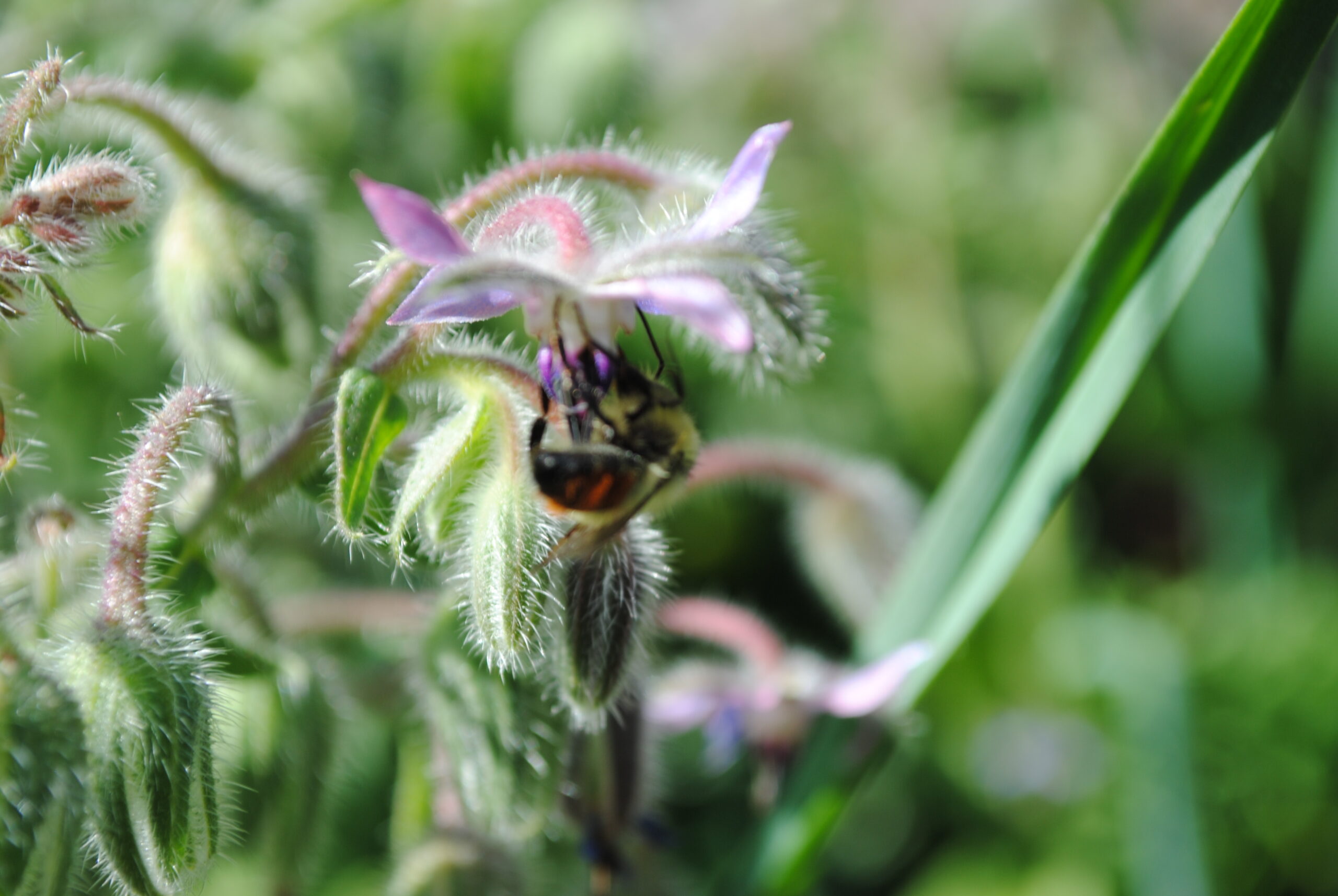
Borage officinalis
Borage officinalis – Borage, Bee Bread, Common Bugloss and Starflower are a few of its common names. It grows 2 feet tall and wide and self-seeds. Its mature foliage is covered in prickly hairs. Pretty, star-shaped flowers in blue, lavender and pink bloom from May to hard frost. Bees, butterflies and moths prize its…
-
Vegetable Container growing
Growing Vegetables in Containers is suited when space is not available for a typical vegetable garden or mobility makes bending difficult or wanting to increase your growing area. All are solid reasons for gardening in pots. Large containers are the best as they hold more soil, which dries out slower and provides more growing…
-
Perennial Portrait – Cat Nip
I chose to profile this perennial to clarify if catnip and catmint were one and the same. Experts say that Catnip usually refers to the medicinal plant and Catmint refers to the ornamental varieties. The ornamental varieties available have more and larger flowers, deeper colours and a tidier growth habit. Used medicinally for 100‘s…
-
Defining Space
Our need to define space started when we had to protect ourselves from invaders. Food and water, essential to life had to be protected as well, hence the ancient “Walled” or “Medieval” garden. In our homes we have the walls and ceiling to define our space. In our landscape we may have large trees…
-
Perennial Portrait – Thyme
Perennial Thyme in the garden All Thyme, annual or perennial like full sun, good drainage, and lean to poor soil. Perfect for a Prairie garden. Their tiny leaves reduce moisture loss and contrast well with larger leaved plants. Thymus vulgaris grows 15cm high and spreads 45cm. A common name is ‘English thyme’. It has…
-
Do you have a garden journal?
I know it is difficult to find time to update your garden journal, but even if it’s a couple of weeks after the work, making notes which you will understand a year from now can help you in the long run. Some of the the things I record are dates of transplants and the health…
-
Ornamental Grass
For drought tolerance and few pest problems, Ornamental grasses are a low maintenance, beautiful addition to your garden. Not only do they provide year around interest they require minimum care. This is a short list of what is available. Types to choose fromClump forming, the slow expansion of a well-behaved perennial. Suitable for mixed…